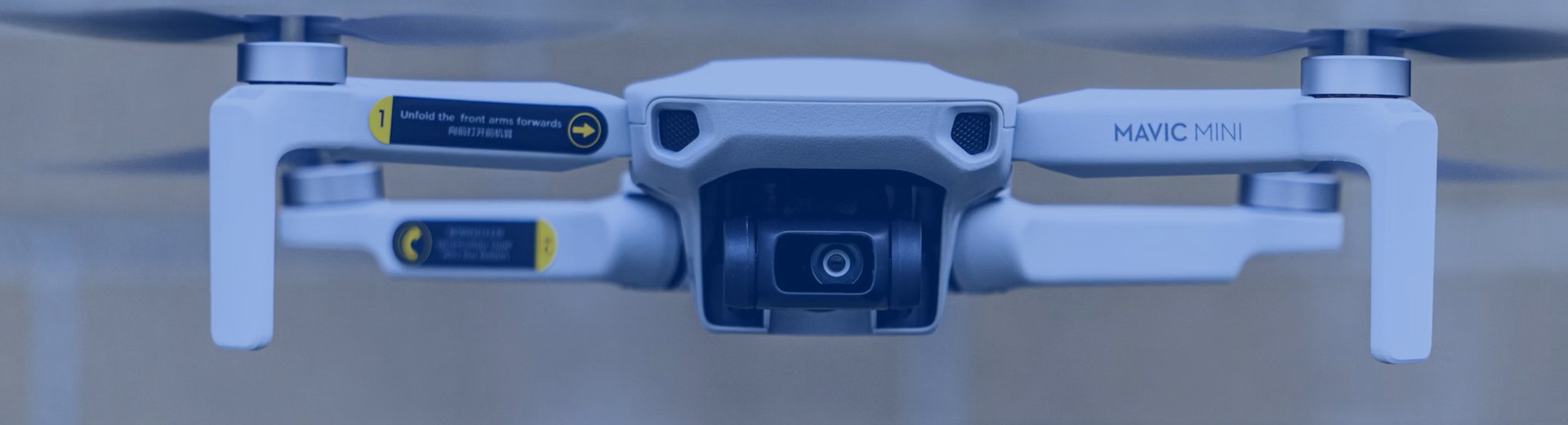
Drone Performance Testing
The performance testing of drones is a systematic verification process, aimed at ensuring that drones can safely, stably, and efficiently complete tasks in various expected working environments. A complete testing framework typically covers several core dimensions.
Reliability and Environmental Adaptability Testing
This type of testing mainly verifies the survival and operational capabilities of drones under harsh conditions.
Drone needs to fly in extreme conditions such as extreme cold (-20℃), high temperature (+55℃), high humidity, and strong wind (6-8 levels) to test its battery, motor, structural materials, and flight control system. For example, in the plateau at an altitude of 5380 meters, the air is thin, and the lift efficiency and power system of the drone need to be tested in detail.
Verify the drone's ability to withstand interference in complex electromagnetic environments, ensuring stable data links and reliable triggering of safety strategies such as automatic return, emergency landing, etc., when signals are interfered with or lost.
Through vibration, impact, and drop experiments, simulate wear during transportation and use, and test the structural strength and mechanical lifespan of the drone.
Flight Performance Testing
This is the foundation of drone performance, focusing on its basic flight capabilities.
Test the maximum flight time of the drone under different loads. This is a key metric for measuring its mission efficiency, such as the ability of large tethered drones to hover for hours without load. At the same time, its payload capacity is also tested, such as the ability to safely lift and transport specific heavy objects in plateau environments.
Includes hover accuracy (horizontal and vertical deviation) at different wind speeds, maximum flight speed, ascent and descent speeds, etc. Automatic flight capabilities, such as flight accuracy along preset routes, are also important test items.
At high altitudes, low air density leads to a decrease in lift, and the power system needs to have sufficient "power margin" (usually requiring more than 20%) to ensure stable flight.
Mission Capability Testing
This part of the testing directly targets the actual application scenarios of drones, verifying the effectiveness of their performance in executing specific tasks.
For aerial photography or reconnaissance drones, test the recognition distance, positioning accuracy, image resolution of their on-board camera equipment, and the clarity and latency of the transmitted images.
Design test subjects based on specific purposes. For example, firefighting drones are tested for their spraying distance, flow rate, and window-breaking accuracy; cleaning drones are tested for their uniform spray coverage and cleaning efficiency.
Test the collaboration of multiple drones, or the ability of drones to cooperate with other systems (such as ground stations, other equipment), such as connecting the link from reconnaissance to strike.
Safety Assurance Testing
Safety assurance is the top priority in drone testing, ensuring that risks are minimized in unexpected situations.
It is necessary to comprehensively test the effectiveness of functions such as one key return, low battery automatic return, loss of control protection, emergency stop, etc.
For drones operating in complex environments, test the sensitivity of their perception systems (such as millimeter-wave radars and visual sensors) and verify their ability to avoid obstacles.
Check the overcharge/over-discharge protection, high-temperature tolerance of the battery, and test the drone's emergency response capabilities when the power system experiences a single-point failure.
Appearance, Structure, and Basic Functionality Inspection
Before dynamic testing, a comprehensive static "check-up" of the drone is conducted.
Check for any damage, deformation, secure installation of parts, and reliable welding points.
Verify the remote controller's response speed, mode switching, and normal display of ground station monitoring data, etc.
Test Process Overview
A standardized test process typically includes the following stages:
Preparation
Clearly define test standards and objectives, check device status, and apply for airspace.
Laboratory Testing
Conduct preliminary performance and safety testing in a controlled environment.
Field Testing
Test in real or simulated mission scenarios to collect flight data.
Data Analysis and Report
Analyze the test data, generate reports, and provide data for product optimization.