
返回列表

IEC 62133 Certification

In December 2012, the International Electrotechnical Commission (IEC) formally published the second edition of the international safety standard for battery products, IEC 62133:2012(ed2.0). This standard mainly addresses the safety requirements for single batteries and battery packs and portable sealed batteries and battery packs (including lithium batteries, nickel-hydrogen batteries, nickel-cadmium batteries, and other types).

The new version of IEC 62133 divides the testing criteria into two major sections: the nickel battery system and the lithium battery system. This article introduces the main changes in the lithium battery system section.

The new version of IEC 62133 adds new test items such as forced internal short circuit, overcharging (pack), transport test, and battery design recommendations. It also updates the charging steps and continuous low-voltage charging test item.

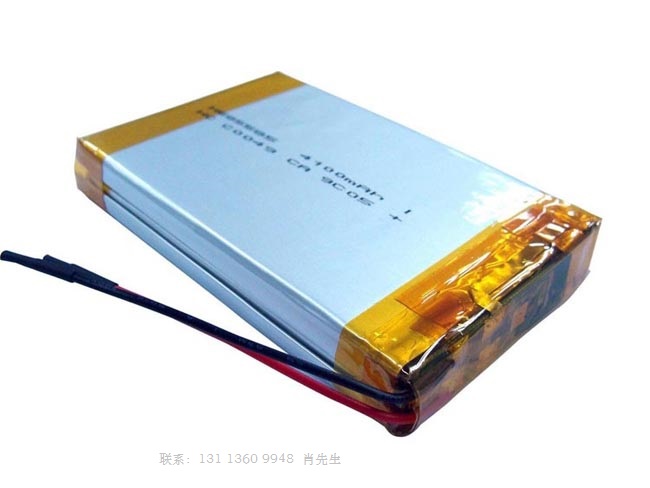
Battery.jpg

IEC 62133 Certification Mark

IEC62133.jpg

Updated Charging Procedure

According to the new version of IEC 62133, when testing the following three external short circuits, thermal shocks, and squeezing, as well as external short circuits for batteries, the cell or battery charging must be performed at the peak charging temperature.

New Forced Internal Short Circuit Test

The purpose of this test is to simulate the potential danger level of metal dust, debris particles, and other impurities that may enter the battery cell during the manufacturing process and cause internal short circuits by piercing the diaphragm between the positive and negative electrodes. The test object is for cylindrical or prismatic battery cells. At present, this test is only applicable to South Korea, Japan, Switzerland, and France.

New Transport Test

According to the new version of IEC 62133, lithium batteries must pass the relevant tests according to IEC 62281 requirements. Its test items are the same as those of UN38.3 tests. Therefore, if the manufacturer can provide a certificate indicating compliance with UN transport requirements, the transport test can be waived, and it can be directly determined that the transport test is qualified.

IEC 62133 Standard Mainly Includes the Following Test Items

Cell

  • Continuous low-rate charging
  • Vibration
  • Temperature cycling
  • External short circuit
  • Internal short circuit
  • Free fall
  • Impact (collision)
  • Thermal misuse (thermal shock)
  • Squeezing
  • Low pressure
  • Overcharging
  • Forced discharge
  • High-rate charging protection function (lithium system)
  • Marking and packaging
  • Transport test
  • Incorrect installation (nickel system)

Battery

  • Vibration
  • Shell stress under high temperature
  • Temperature cycling
  • External short circuit
  • Internal short circuit
  • Free fall
  • Impact (collision)
  • Marking and packaging
  • Transport test
  • Overcharging (nickel system)

Among these test and verification items, most are common routine test items, but there are still some projects worth paying attention to and considering.

  • 1.13KN SqueezingThe test object of this project is the battery cell. Although it is a common and routine project, it is explicitly required to extrude the long and short axes of the square battery cell, that is, the two planes of the length and width of the battery cell. According to testing experience, polymer flexible packaging battery cells may experience non compliant phenomena such as combustion or explosion when extruded on the width axis (side). Therefore, for polymer flexible packaging battery cells, it is recommended to pay special attention to this project.
  • 2. Continuous low-speed chargingThis project tests battery cells. The standard stipulates that fully charged batteries should be charged continuously for 28 days according to the charging method specified by the manufacturer. This project is not common in other safety standards. Considering that the charging methods specified by battery manufacturers are mostly constant current and constant voltage charging, it requires manufacturers to comprehensively consider the regulation and limitation of charging current and even the cut-off voltage during full charging. If necessary, the design of the battery cell must consider the ability to withstand continuous charging.